Twenty-five miles south of San Francisco, a reef nobody wanted to surf became the proving ground of American big wave riding.
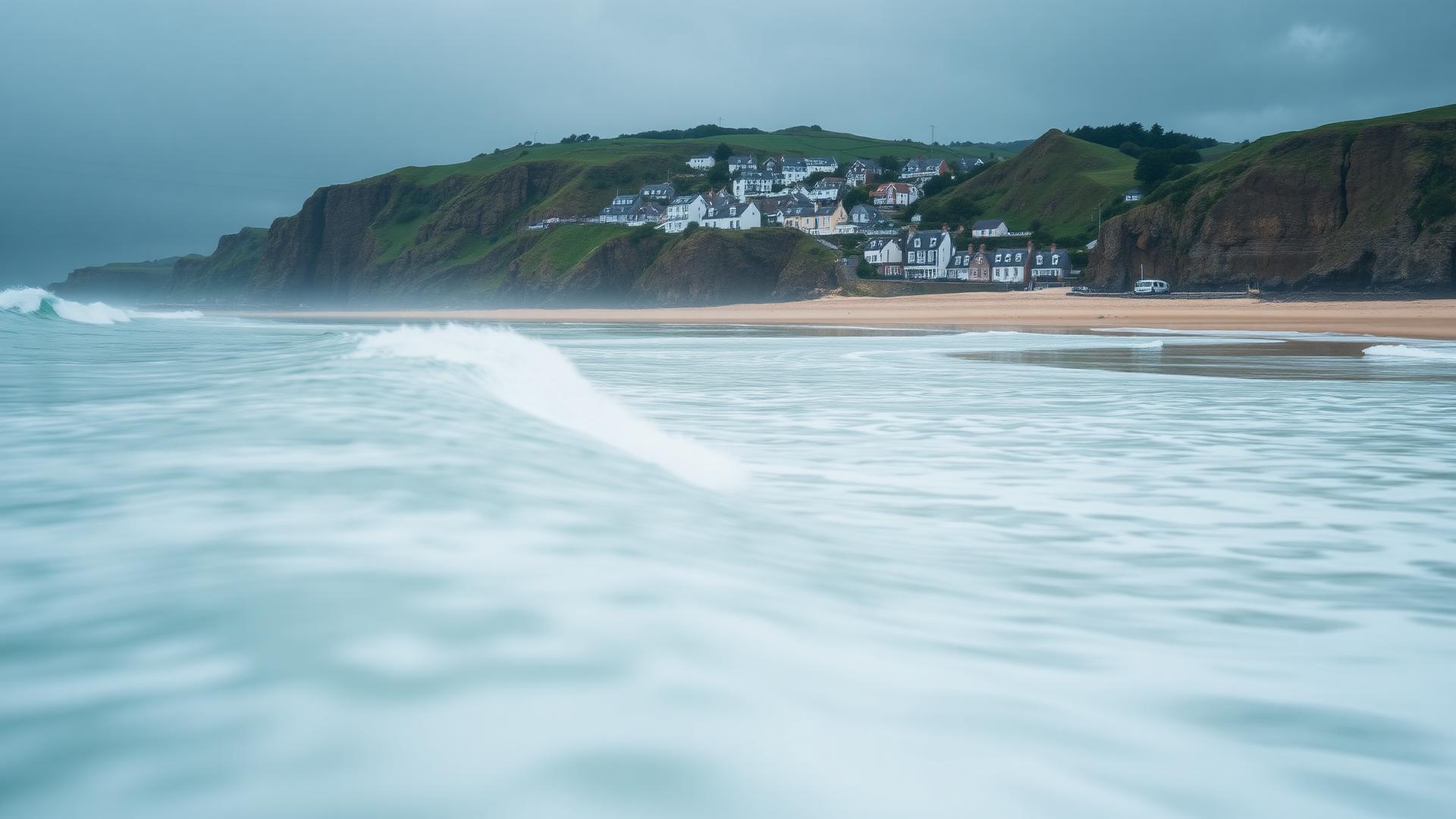
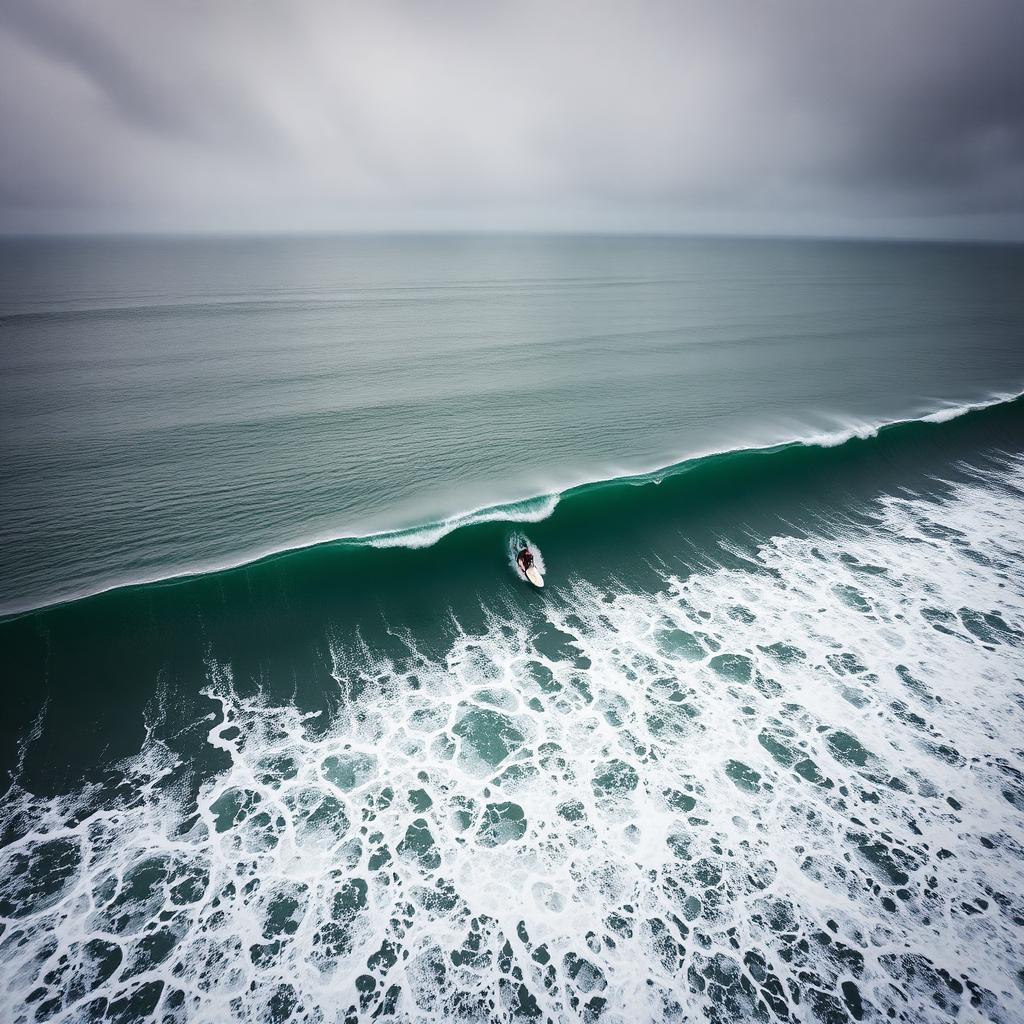
Half Moon Bay looks like any other fog-draped fishing town on Highway 1 — a working harbor, pumpkin farms, a Main Street with more antique shops than surf shops. Then a big winter swell hits the North Pacific, and half a mile off Pillar Point, a submerged reef throws up faces that top out at 60 feet, cold enough to numb your hands in ninety seconds and violent enough to have killed some of the best big wave surfers alive. This is Mavericks, and it does not care how good you are anywhere else.
There is no warm-water glamour here, no turquoise lagoon for the Instagram shot. Mavericks is gray water, gray sky, and a wave that has forced modern big wave surfing to grow up fast.
Why Pillar Point Focuses the Pacific
Mavericks breaks over a shallow, jagged rock reef that juts out from Pillar Point like an underwater ramp. The reef's shape does something unusual: it refracts and focuses deep-water groundswell energy from the north and northwest into a single powerful peak, roughly half a mile offshore. Swells that would otherwise pass by at a modest size get bent and stacked here, doubling or tripling in the final approach. That is why a storm generating 15-foot swells in the open Pacific can produce 40 to 60-foot faces at Mavericks by the time the energy hits the reef.
The takeoff zone sits directly above jagged rock in shallow water, meaning a wipeout does not just mean a long hold-down in deep water — it can mean getting driven into the reef itself. Locals call the inside rock garden the Boneyard for a reason: it is where boards, boats, and occasionally surfers have been shattered.
Jeff Clark's Fifteen Lonely Years
- 1975 — a 17-year-old Jeff Clark paddles out alone at Mavericks for the first time, convinced the wave is rideable
- 1975 to 1990 — Clark surfs it by himself, season after season, unable to find a single partner willing to join him
- 1990 — Clark finally convinces Hawaiian big wave surfers Mark Foo, Richard Schmidt, and photographer friends that the wave is real and rideable
- Within a year, footage and photos of Mavericks spread through the surf world and the break goes from local secret to global obsession
For a decade and a half, Clark was the only person who believed Mavericks was surfable, let alone worth surfing. Every winter he checked it alone, rode waves alone, and paddled in alone in near-freezing water with no jet-ski support, no leash technology built for the size, and no one who would believe him if something went wrong. When the world finally saw what he had been riding, it reshaped the sport's understanding of what a human being could paddle into.
Mark Foo and the Day Everything Changed
On December 23, 1994, Mark Foo — one of Hawaii's most respected big wave surfers and one of the very men who had validated Clark's discovery — paddled out at Mavericks on a solid but not exceptional day. He wiped out on a wave that did not look particularly dangerous on video. He never surfaced. Foo drowned, likely held under and pinned by his leash against the reef, and his death sent shockwaves through the entire surf industry.
Foo's death did more to change big wave safety culture than almost any single event before it. It forced a reckoning: leash technology, quick-release systems, dedicated jet-ski rescue teams, and inflatable safety vests all trace part of their urgency back to that morning. Mavericks stopped being treated as an extreme curiosity and started being treated as a serious, professionally managed danger zone.
From Titans to the WSL Big Wave Era
- 1999 — the first Mavericks Surf Contest is held, later rebranded Titans of Mavericks
- 2000s — the event becomes an on-call format: organizers wait for the right swell window and give competitors 24 to 48 hours notice
- 2016 — Titans of Mavericks stages the first women's big wave heat in the event's history, a milestone for the sport
- 2021 onward — the World Surf League folds Mavericks into its Big Wave Challenge tour, alongside Nazaré and Jaws
- 2026 — a moderate El Niño winter is expected to generate an unusually strong run of qualifying swells
Unlike a scheduled tour stop, a Mavericks contest is an alert system as much as an event. Athletes stay on standby all winter, packed and ready to fly to San Francisco the moment forecasters flag a swell big enough and clean enough to run. That waiting game is part of what makes the culture around Mavericks so different from tropical big wave spots — nobody controls the calendar here, the ocean does.
Life in the Red Triangle
Mavericks sits inside what marine biologists and surfers call the Red Triangle, a stretch of Northern California coastline running roughly from Bodega Bay to Big Sur and out to the Farallon Islands. It has one of the highest concentrations of great white shark activity anywhere in the Pacific, largely because the Farallones host a dense seal and sea lion population that draws adult white sharks close to shore every fall and winter — the exact season Mavericks fires.
Surfers here rarely talk about it out loud in the lineup, but everyone knows the math: cold, murky, seal-rich water plus a serious predator population is simply part of the deal. It is one more reason paddling out at Mavericks without local knowledge, a rescue team, and real experience is considered reckless rather than brave.
What a 25-Foot Face Actually Feels Like
Big wave surfers use the Hawaiian scale, which measures the back of the wave rather than the face — so a called '25-foot' Mavericks wave has a face closer to 40 to 50 feet, roughly the height of a four or five-story building. Paddling into one means sprinting on a 50°F ocean, dropping down a moving wall of water at speeds that can exceed 40 miles per hour, with your hands and feet already going numb inside a 6/5mm wetsuit, hood, gloves, and booties.
A wipeout on a wave that size can mean a hold-down of 45 to 60 seconds — sometimes longer if a second wave lands on top of you before you surface. In water that cold, the combination of oxygen debt and cold shock is what actually kills people, not the impact itself. This is why the sport's modern safety stack exists: it was built specifically for water like this.
The Modern Safety Stack
- CO2 inflatable impact vests that surfers can trigger manually to reach the surface faster after a hold-down
- Dedicated jet-ski rescue teams positioned in the channel on every serious swell day, including at contests
- Quick-release leash systems that let a surfer detach instantly if pinned against the reef
- Coordinated radio communication between water safety, spotters on the bluff, and the Coast Guard
- A strict unwritten rule: nobody paddles out at Mavericks solo on a big day without a ski team on standby
How to Watch It From Pillar Point Bluff
You do not need to be a surfer to experience Mavericks — most people who see it in person are standing on Pillar Point Bluff, a public headland with a direct, if distant, view of the break. Fly into San Francisco International (SFO) and drive about 40 minutes south on Highway 1 to Half Moon Bay; Oakland International (OAK) works as a backup, roughly an hour away. The bluff itself sits behind the harbor, a short walk from public parking, though spots fill up fast on contest days or forecasted giant swells.
- Check Surfline or Buoyweather 72 hours ahead to track the swell's size, period, and direction
- Arrive by 6:30am if a contest alert or major swell is forecast — bluff parking fills quickly
- Bring a 400mm+ telephoto lens or 10x50 binoculars; the peak breaks roughly a third of a mile offshore
- Dress like it is 20 degrees colder than it looks — the wind on the bluff is relentless and damp
- Check mavericks.surfline.com and local livestreams for real-time conditions on the biggest days
Beyond the Wave
- Fitzgerald Marine Reserve in Moss Beach — some of the best tide pools on the California coast
- Highway 1 scenic drive south to Santa Cruz (about 2 hours) or Big Sur (about 4 hours)
- San Francisco day trip — Golden Gate Bridge, Alcatraz, and one of the best food scenes in the country
- Half Moon Bay Brewing Company and Sam's Chowder House for post-bluff comfort food and ocean views
- Wine tasting at small coastal wineries scattered around Half Moon Bay
Mavericks 2026 Checklist for Spectators and Photographers
- Waterproof, windproof, and thermal layers — the bluff is exposed and cold year-round
- 400–600mm telephoto lens or a solid pair of 10x50 binoculars
- Downloaded offline maps — cell coverage near the bluff can be spotty
- A full tank of gas and cash for parking; Half Moon Bay fills up fast on swell weekends
- Patience — the best swells often arrive with only 24 to 48 hours of notice
Mavericks will never be a wave for casual surfers, and it was never meant to be. It exists as a filter: a place that separates preparation from bravado and rewards decades of local knowledge over raw talent. For the rest of us, it is one of the greatest free spectacles in American sport — a reminder that some of the most extreme athletic feats on Earth happen not in stadiums, but in 50-degree water off a quiet fishing town, in full view of anyone willing to stand on a windy cliff and watch.
"Nobody conquers Mavericks. At best, you survive it with respect."