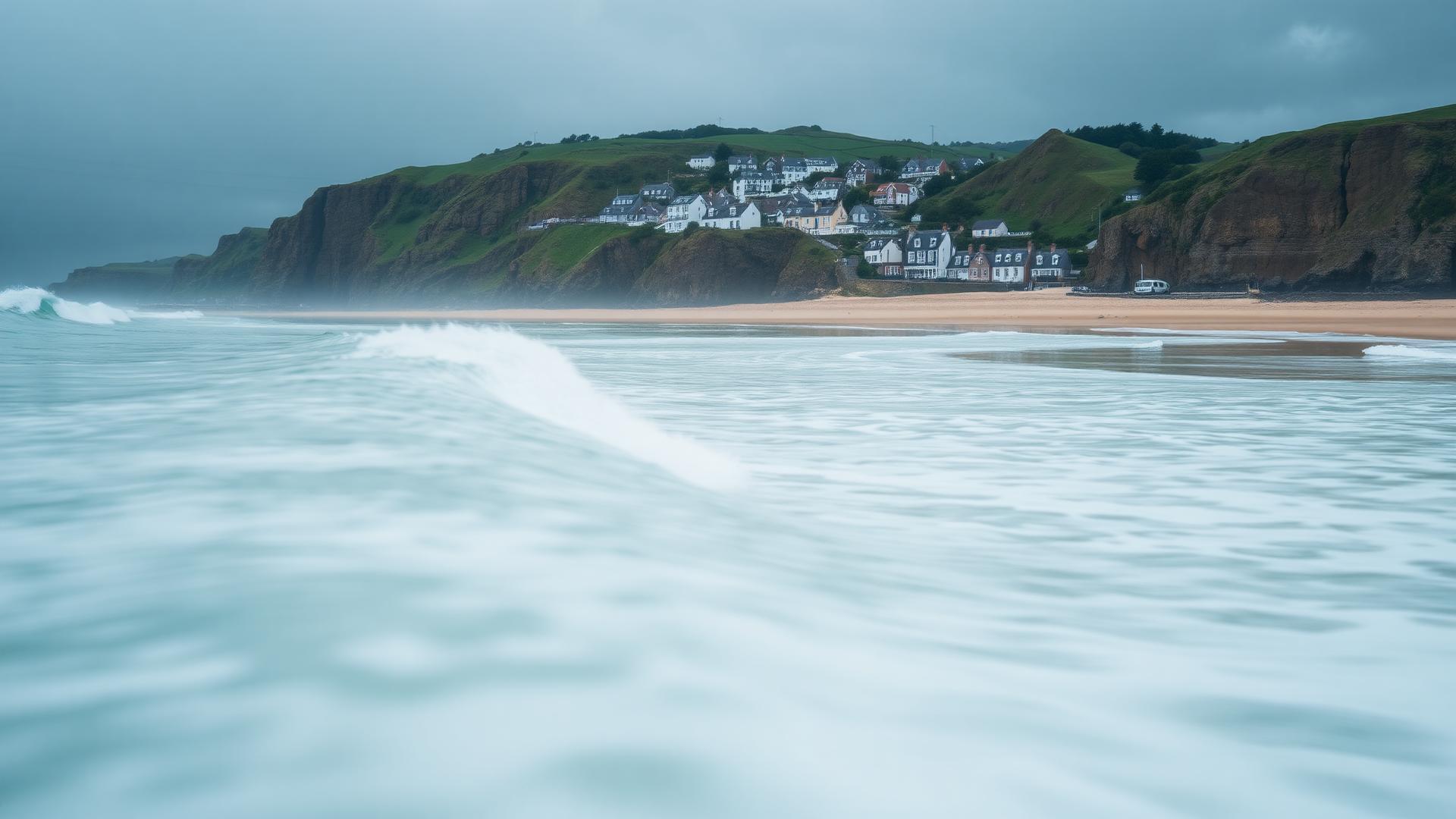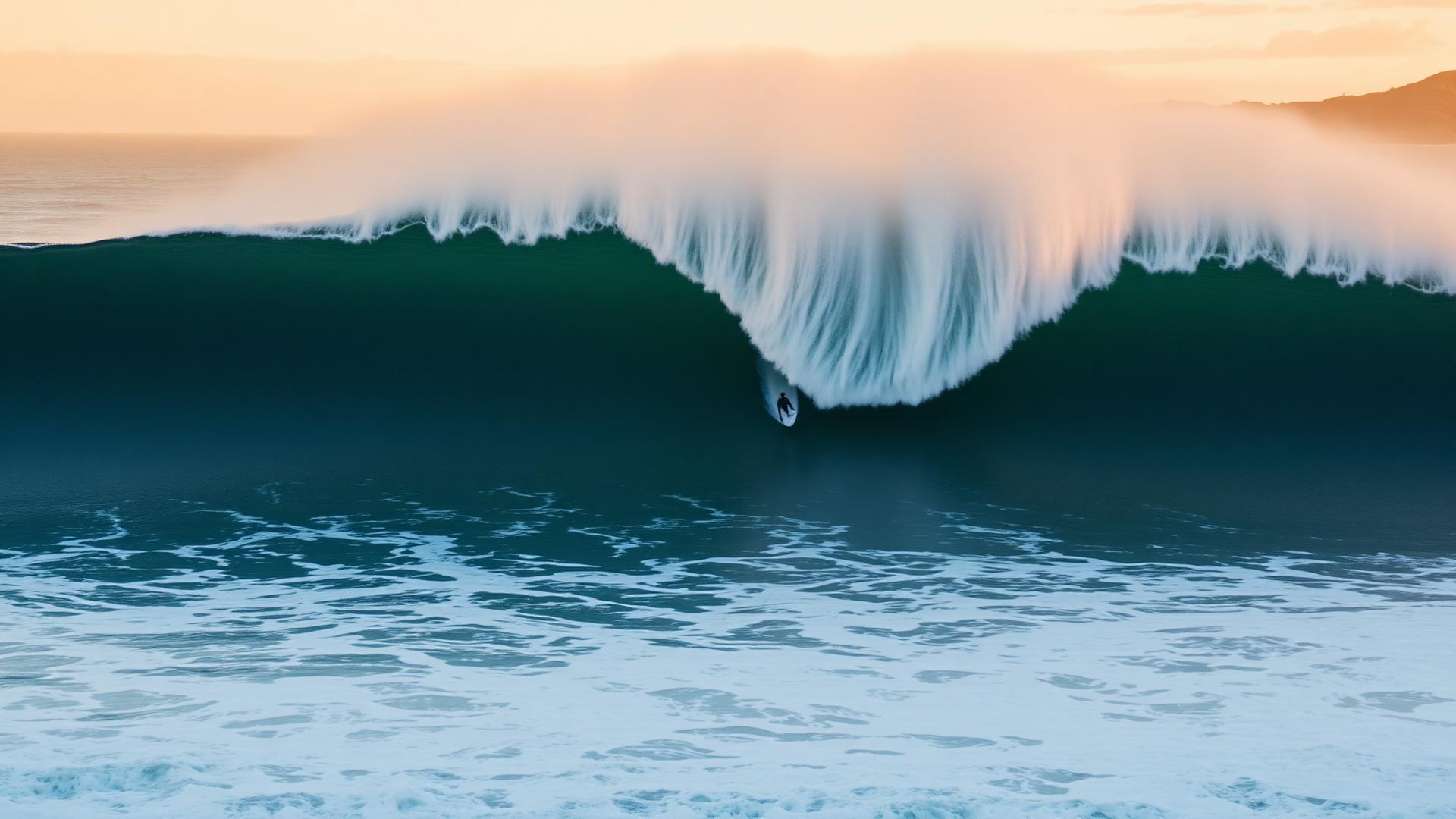
There is no wave on earth more photographed, more feared, and more revered than Pipeline.
On a seven-mile stretch of Oahu's North Shore, a shallow lava reef sits about 500 yards off Ehukai Beach Park and turns ordinary winter swells into the most consequential barrels in surfing. Locals just call it Pipe. Everyone else calls it the wave that decides who gets to be a legend.
This is not a spot for a bucket-list paddle-out on a whim. It is a stadium, a proving ground, and for a six-week window every winter, the epicenter of professional surfing. Here is everything you need to understand it, respect it, and maybe even surf it.
The Anatomy of a Killer Wave
Pipeline's menace comes down to geology. Three separate reef shelves stack up like stairs beneath the surface, and which one activates depends entirely on swell size and direction.
- First Reef (Pipe): the shallowest and most famous shelf, producing the classic late-drop, square, hollow left in the 4-12 foot range
- Second Reef (Backdoor): the right-hand mirror image, longer and more open, only lighting up once swells push past 8 feet
- Third Reef: a deep-water shelf that only wakes up during genuinely historic swells, north of 20 Hawaiian feet
When a north swell rolls in between November and February carrying a 16 to 20 second period, the deep-water energy slams into that shallow shelf almost instantly. The wave sucks dry in a heartbeat, throws a thick, glassy lip, and detonates onto a coral floor pockmarked with caves and blades sharp enough to cut to the bone. Reef boots and helmets, once considered soft, are now standard kit even for the best surfers alive.
From First Tube to World Stage: A Brief History
- 1961 - Phil Edwards rides the first documented tube at the break and simply calls it Pipeline; the name sticks forever
- 1970s - Gerry Lopez, later nicknamed Mr. Pipeline, invents the low, cross-stepped stance that becomes the blueprint for tube riding
- 1975 - Shaun Tomson wins the inaugural Pipe Masters, cementing the event as surfing's ultimate stage
- 1990s - the tow-in era, spearheaded by Laird Hamilton and a circle of North Shore watermen, pushes big-wave riding into new terrain nearby
- 2010s - John John Florence, raised in a house steps from the beach, becomes a two-time world champion largely on the back of his Pipeline mastery
- 2022 - the death of Kalani David in the lineup is a grim reminder that Pipe forgives no one, regardless of experience
- 2024-2025 - the Pipe Masters returns to the Championship Tour calendar, with a 52-year-old Kelly Slater still taking heats at the spot that made him
The Pipe Masters and the CT Circus
Every December, a temporary village of scaffolding towers, camera booms, and beach tents rises on the sand at Ehukai. Broadcast crews rig cables through the ironwood trees, judges climb into elevated towers, and thousands of fans line the shore for a swell window that can open and close within hours. The event has survived numerous format changes over the decades, from a standalone specialty event to the closing stop of the world tour, but its status as the ultimate test of tube-riding skill has never wavered.
Waiting periods can stretch for weeks because organizers refuse to run the event in anything less than genuine Pipeline conditions. When the right swell finally lines up, officials can call surfers into the water with only a few hours notice, and the entire North Shore community drops what it is doing to watch.
For decades the Pipe Masters has closed out the World Surf League's Championship Tour, and it remains the single most prestigious event in the sport. Winning a world title on this stretch of reef, in front of a beach packed with photographers, rival surfers, and locals perched on the sand, carries a weight no other contest venue can match.
The format rewards surfers who can read the shifting peak between First Reef and Backdoor in real time, and priority battles here get tense fast. A mistimed drop can mean a broken board; a mistimed call on priority can mean a public shouting match on national broadcast.
The Most Filmed Wave on Earth
No wave has been documented as obsessively as Pipeline. Water photographers position themselves in the channel at first light, swimming for hours to capture a handful of usable frames, while land-based lenses line the beach shoulder to shoulder during a good swell. That relentless documentation is part of why Pipeline carries so much mythology; nearly every major tube ridden here over the past thirty years exists in crisp, high-resolution detail, replayed endlessly across surf media.
Tubes That Defined an Era
- Jamie O'Brien's frame-by-frame sessions inside Backdoor's cavernous barrels, filmed for Red Bull and studied by an entire generation
- Kelly Slater's perfect 10-point ride during the 2019 Pipe Masters, still one of the highest-scoring waves in CT history
- Makua Rothman's 10-point tube during the epic swell of 2015, ridden alongside a pack of the best barrel riders on the planet
- The infamous Backdoor Shootout sessions, where 15-foot faces and a shoulder-to-shoulder crowd on the beach turn every wave into theater
How to Survive the Lineup
- Best season: December through February, with the swell window typically peaking in January
- Ideal size: 6-12 feet on the Hawaiian scale, roughly 12-20 feet on the face
- Board: a 6'4" to 7'0" step-up or gun with significant rocker to handle the late, steep drop
- Crowd factor: up to 80 surfers can stack the peak on a classic day; priority is enforced socially, and violations are met loudly
- Local etiquette: the North Shore ohana runs deep. Arrive humble, wait your turn, and always acknowledge a wave you were given
- Insider tip: if First Reef is a zoo, paddle to Backdoor. It is almost always less crowded and pays the same tube for those willing to take the steeper right
Reading the Swell Before You Paddle Out
Serious visiting surfers check three things obsessively before committing to a session: swell period, wind direction, and tide. A long-period north swell arriving on a light trade wind morning, ideally around mid to low tide, produces the cleanest, most makeable version of Pipeline. Onshore afternoon winds chop up the face and make the drop far more dangerous, so North Shore regulars treat the dawn patrol window as sacred.
Lifeguards on this stretch of coastline are some of the most experienced in the world, and for good reason. Even strong swimmers can be held down for two or three waves in a heavy set, and the shallow reef means a bad wipeout often ends in stitches rather than just a scare. Respect the ocean here or it will happen to you eventually.
North Shore Logistics: Getting There and Living Well
- Fly into Honolulu International Airport (HNL), then it is a 45-minute drive north on the H-2 and Kamehameha Highway to Pipeline
- Base yourself in Haleiwa for restaurants, surf shops, and easy access to the whole North Shore stretch, from Waimea to Sunset Beach
- Book accommodation 6-12 months ahead for the December-February season; team houses and short-term rentals fill up fast
- Refuel at the food trucks along Kamehameha Highway: Giovanni's Shrimp Truck and Matsumoto Shave Ice are North Shore institutions
- Catch sunset at Waimea Bay, where cliff jumpers and off-duty pros gather most evenings during the winter season
Pipeline Trip Checklist
- Valid passport and, for most visitors, an ESTA authorization
- Rental car with four-wheel drive; low-lying stretches of the highway flood after heavy rain
- Travel insurance that explicitly covers surfing and other high-risk activities
- Reef boots, a helmet, and a board bag rated for checked baggage impact
- A healthy dose of humility for the lineup, whether you paddle out or just watch from the sand
Pipeline is not simply a wave to check off a list. It is a rite of passage that has humbled world champions and ended sessions in the emergency room. Everyone who has genuinely earned a tube here carries that memory for life.
"When you get a good tube at Pipeline, everything else in life gets a little easier."
GALLERY
REFERENCES
- Surfline
- WSL
- The Surfer's Journal
- Encyclopedia of Surfing
- Stab Magazine
- BeachGrit
- Hawaii Tourism Authority