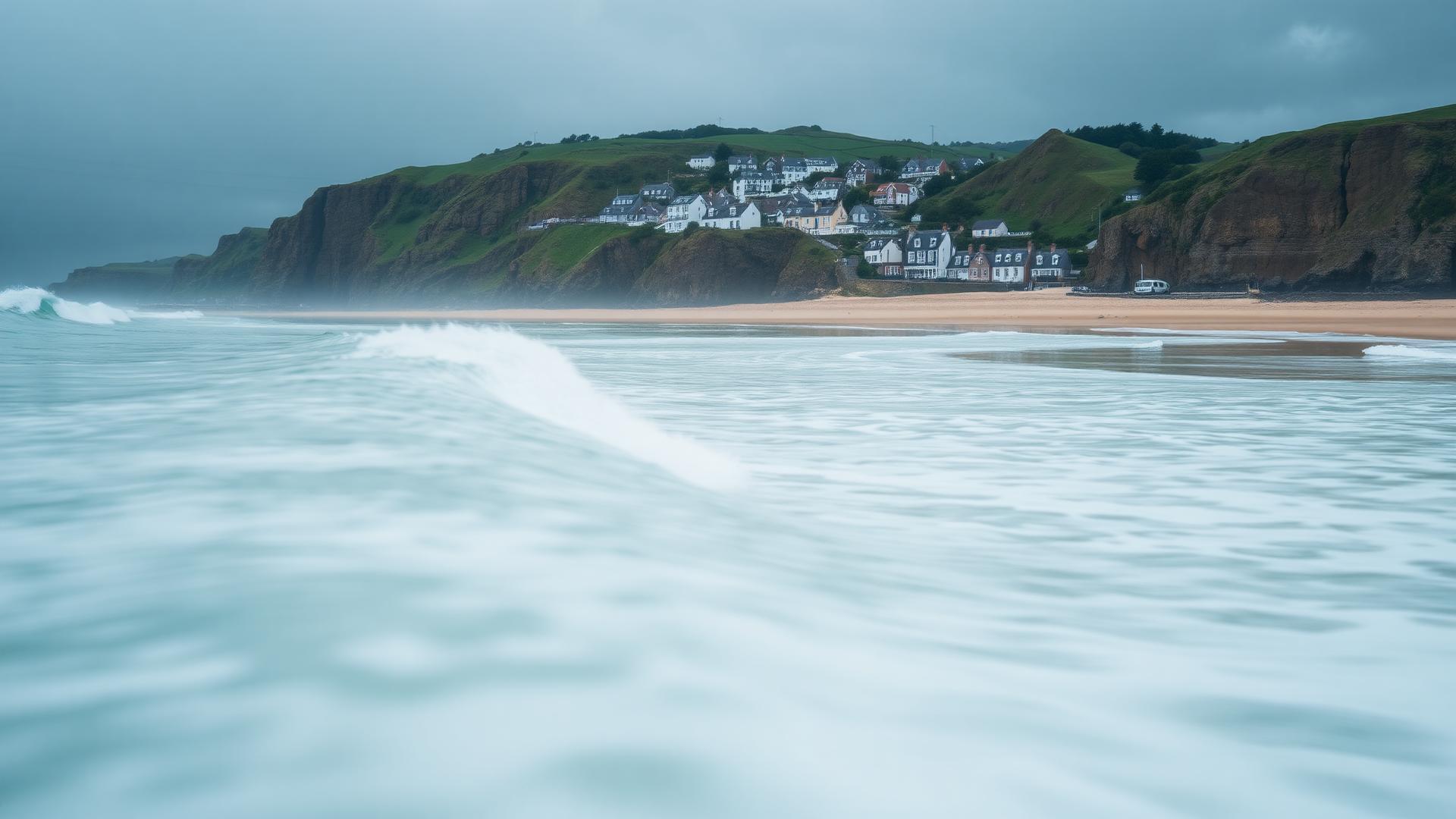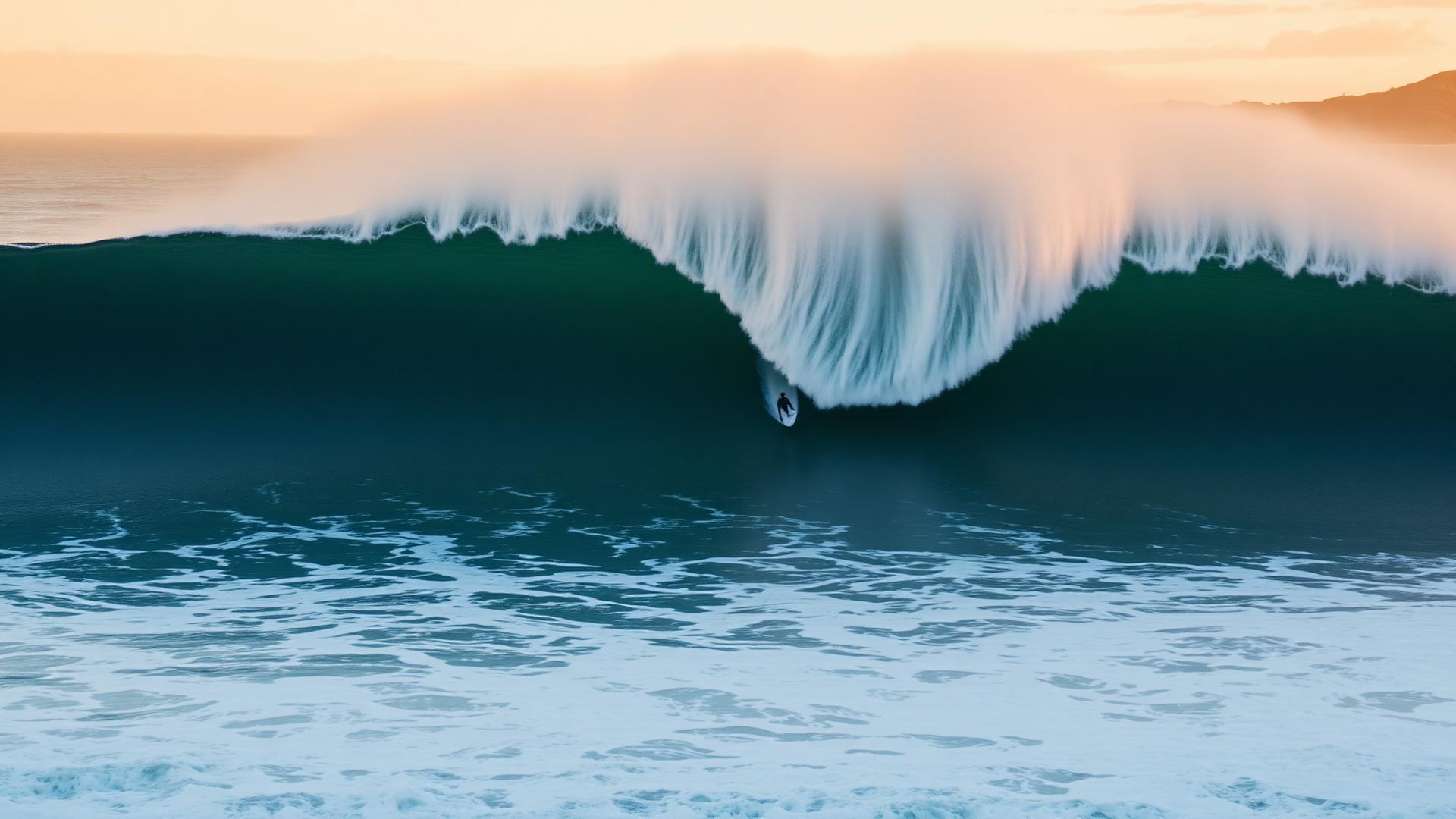
There is a wave in the South Pacific that surfers simply call "Chopes", short for a name that translates to the wall of skulls.
Teahupo'o sits at the southwestern tip of Tahiti, in French Polynesia, where a deepwater channel funnels open-ocean swell onto a shallow, razor-sharp coral reef barely knee-deep at low tide. The result is a wave unlike any other on the planet: absurdly thick, impossibly hollow, and violent enough that even the best surfers in the world talk about it in hushed tones before a big swell hits.
It is not the tallest wave in the world, and it rarely tops 10 to 12 feet on the face. But no wave on Earth throws more water, more suddenly, over less reef. That single fact has made Teahupo'o the ultimate proving ground of modern surfing, a fixture on the WSL Championship Tour, and, in 2024, the venue chosen for Olympic surfing at the Paris Games despite being roughly 15,700 km from Paris itself.
The Wall of Skulls
In Tahitian, Teahupo'o roughly translates to "place of skulls" or "wall of heads," a name locals say refers to an old tribal battle fought near the pass, long before anyone thought to paddle into the lineup. Surfers adopted the darker, more literal translation, "wall of skulls," because it fit the wave's reputation perfectly: a place where the reef is close enough to touch and unforgiving enough to end a career, or a life, in a fraction of a second.
Discovery: From Bodyboards to Tow-Ins
Tahiti is the largest island in French Polynesia, and Teahupo'o's wave was barely on the radar of Western surfers until the 1980s, when local bodyboarders began sliding into the pass and realized the lefts breaking there were something entirely different from anything else in the islands. Word spread slowly, the way it did before the internet, through photographs passed between traveling surfers and the occasional magazine spread.
The wave exploded into global consciousness in the 1990s with the arrival of tow-in surfing. Pioneers like Laird Hamilton realized that paddling into Teahupo'o on the biggest days was nearly impossible, but a jet ski could whip a surfer into the wave early enough to make the drop and disappear inside a barrel thick enough to swallow a bus. Suddenly, a wave that had been considered unsurfable on its biggest days became the ultimate big-wave tow-in target, and the surf world could not look away.
Code Red 2000 and Code Red II 2011
Two swells define the modern mythology of Teahupo'o. In August 2000, a monster south swell produced conditions so extreme that photographers and surfers on site nicknamed it "Code Red." Laird Hamilton dropped into what many still call the heaviest wave ever ridden, an image that ran on the cover of surf magazines worldwide and remains one of the most reproduced photographs in the sport's history. That same swell nearly claimed lives, and it cemented Teahupo'o's reputation as surfing's most dangerous proving ground.
Eleven years later, in August 2011, an even larger swell arrived and was immediately dubbed "Code Red II." Waves in the 15 to 20 foot range detonated on the reef for two consecutive days, drawing every major tow-in and paddle-in big-wave surfer in the world. The footage from that swell, much of it shot from helicopters and jet skis positioned dangerously close to the impact zone, remains a benchmark for what heavy-water surfing looks like at its absolute limit.
Wave Mechanics: Why Teahupo'o Breaks the Way It Does
- A deepwater channel next to the reef allows southwest swell energy to arrive with almost no loss of power before hitting shallow water
- The reef itself is a living coral shelf that rises abruptly from deep water to just 0.5 to 1.5 meters, creating an extremely fast, sudden jack-up
- That abrupt change in depth forces an enormous amount of water to draw off the reef and pitch forward at once, producing the wave's signature thick, square lip
- The wave almost always breaks left, running along the reef pass toward the channel where boats and safety skis wait
- Best swell direction is south to southwest, generated by winter storms in the Southern Ocean, typically peaking between April and August
The Tahiti Pro and the Paris 2024 Olympics
Teahupo'o has hosted a WSL Championship Tour event, currently the Tahiti Pro, most years since 1999, and it consistently ranks among surfers' favorite and most feared stops on tour. When the International Olympic Committee and Paris 2024 organizers announced that Olympic surfing would be held at Teahupo'o rather than anywhere near mainland France, it sparked immediate debate. Supporters argued that only a wave of Teahupo'o's caliber deserved to crown Olympic champions in a sport built on wave quality. Critics pointed to the logistics of holding an Olympic event nearly 10,000 miles from the host city.
The loudest controversy centered on a new aluminum judging tower built on the reef itself, replacing an older wooden structure. Environmental groups and prominent surfers, including several Tahitian locals, protested that construction equipment was damaging the living coral. The project was ultimately scaled back and modified, but the debate highlighted the tension between showcasing Teahupo'o to a global audience and protecting the fragile reef that makes the wave possible in the first place. When competition finally ran in August 2024, the surfing was widely praised as some of the best in Olympic history, and the story ended in fairytale fashion.
Legends of the Lineup
- Kelly Slater – five event wins at Teahupo'o, including a perfect 10-point ride in 2015 widely considered one of the greatest waves ever scored
- Andy Irons – his 2005 victory remains one of the most emotional and respected wins in the wave's history
- Gabriel Medina – electric victories in 2014 and 2018, plus the viral mid-air celebration photo from the 2021 Olympic qualifying event
- John John Florence – technical mastery of the wave's most mutant sections, still one of the most feared competitors there
- Vetea "Poto" David and Raimana Van Bastolaer – Tahitian locals who effectively pioneered modern big-wave riding and jet-ski rescue at Teahupo'o
- Kauli Vaast – the Tahitian teenager who won Olympic gold on home reef at Paris 2024, arguably the sport's most romantic Olympic storyline yet
Dangers and Famous Wipeouts
Bruce Irons took one of the most replayed wipeouts in surfing history during the 2000 Code Red swell, a fall so violent it became a defining image of the wave's brutality. Raimana Van Bastolaer, a Tahitian local, has personally rescued dozens of surfers on the biggest days, becoming almost as legendary for his jet-ski work in the channel as for his surfing. In 2022, Portuguese surfer Joaquim Chaves suffered life-threatening reef injuries in a wipeout that underscored, once again, that this is a wave with almost zero margin for error.
How to Get There
Most visitors fly into Faa'a International Airport near Papeete, Tahiti's capital, then drive roughly an hour and 20 minutes southeast to the village of Teahupo'o at the end of the coastal road. The wave itself can only be reached by boat, a 15 to 20 minute ride from the village through the lagoon and out to the reef pass, so lining up a reliable local boat driver before you arrive is essential.
- Stay in the village itself at a simple guesthouse or pension right on the water for the most authentic, budget-friendly experience
- Book an Airbnb in Teahupo'o or nearby Taravao for more privacy and self-catering options
- Choose Papeete for resort-style luxury, roughly 90 minutes by car from the break
- Eat poisson cru, raw fish marinated in lime and coconut milk, at least once, it is essentially Tahiti's national dish
- Stock up on baguettes, cheese, and drinking water at the small village shop before heading out, options near the reef are limited
Gear Checklist
- Step-up board in the 6'4" to 7'0" range with extra rocker for the steep, sudden takeoff
- Reinforced leash rated for heavy surf, standard leashes have failed at Teahupo'o with dangerous consequences
- Reef booties and a helmet, non-negotiable for anyone not born surfing this reef
- Impact vest or inflation vest for anyone attempting the wave above head-high
- Reef-safe sunscreen, the tropical sun over the lagoon burns fast
- Travel insurance that explicitly covers reef lacerations, evacuation, and remote medical transport
Teahupo'o does not reward bravado, and it has never cared about reputation. It rewards precise timing, deep local knowledge, and total respect for a reef that can turn a dream barrel into a trip to the hospital in the same seven seconds. For those who understand that trade-off, there is still nothing else in surfing quite like disappearing into that wall of skulls and coming out the other side.
"You do not ride Teahupo'o. You survive it, and if the ocean feels generous, it lets you keep the barrel of your life."