There is a bay on Oahu's North Shore that decides, on its own schedule, when the world's best big-wave surfers are allowed to compete. Everyone else just watches and waits.
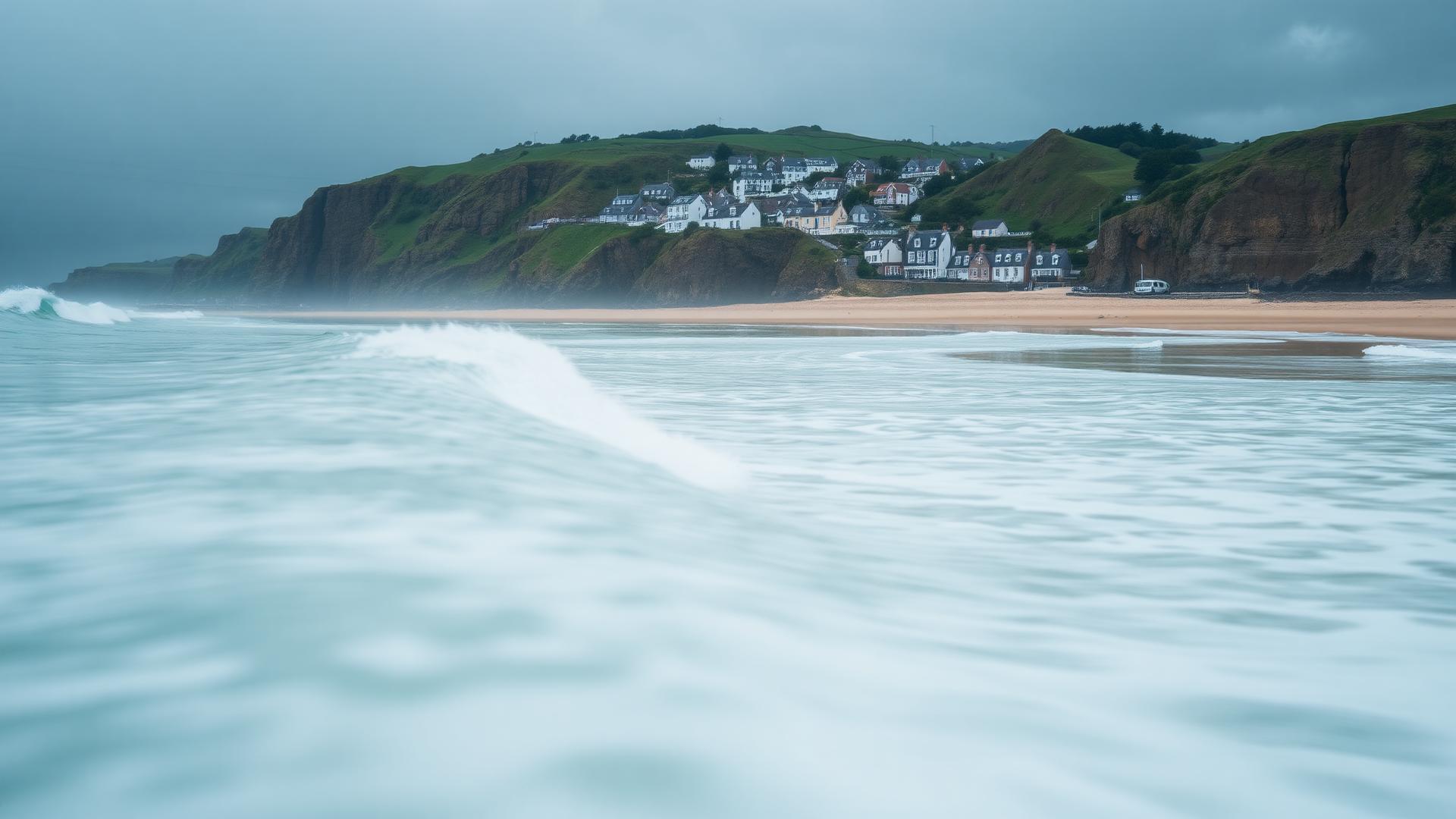
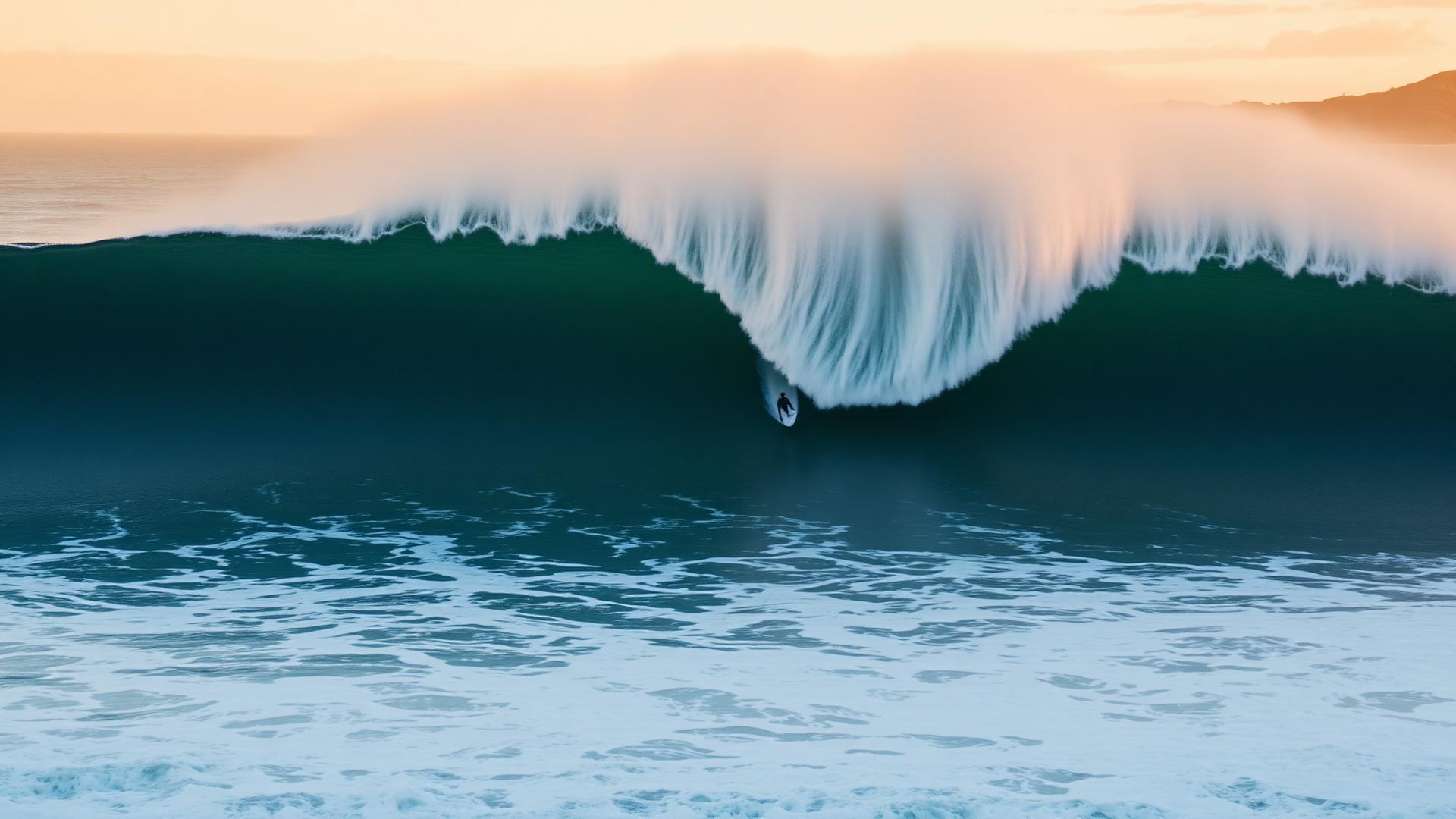
Waimea Bay does not need a shallow reef or a hollow tube to earn its reputation. It is simply a half-moon of deep water, carved by an ancient river canyon, that stands almost flat until a winter swell with enough size and period arrives from the North Pacific. When it does, the bay erupts into 20 to 40 foot faces that break with a concussive boom heard from the parking lot, and everything else on the North Shore stops mattering for the day.
This is the spot where paddle-in big-wave surfing was invented, where a Native Hawaiian lifeguard named Eddie Aikau became a legend larger than any contest trophy, and where a single invitational event can shut down an entire stretch of highway. Welcome to Waimea Bay.
Why Waimea Is the Original Big Wave
In November 1957, a crew of young Californian surfers including Greg Noll, Pat Curren, and Mike Stange stood on the sand at Waimea and stared at something no one had paddled into before: a bay everyone believed was unsurfable, cursed even, after a fatal wipeout there decades earlier had kept surfers away. Noll finally paddled out on an 11-foot wooden board, caught a wave, and in one afternoon rewrote what was considered possible in the ocean. Big-wave surfing, as a discipline separate from regular surfing, effectively starts on that beach.
What makes Waimea unique is its bathymetry. Unlike a reef break where a wave trips over coral and throws a tube, Waimea sits at the mouth of a deep underwater canyon with no shallow shelf to slow the swell down gradually. The energy stays compressed and fast until it slams into the shoreline all at once, producing a thick, chandeliering wall rather than a peeling tube. It needs a very specific recipe to work: long-period groundswell out of the north to northwest, 18 to 22 seconds apart, arriving from roughly 320 to 340 degrees. Anything shorter-period or from the wrong angle just closes the bay out into whitewater soup.
The key features surfers and spectators talk about:
- The Bay itself — a peak that breaks both left and right and can close out across the entire cove on the biggest days
- Outside Waimea — a second, more exposed takeoff zone that only comes alive when the swell pushes past 18–20 Hawaiian feet
- Jump Rock — the 40-foot boulder on the north side of the bay where locals leap into the channel between sets, a rite of passage that predates modern surfing itself
At 6 to 8 feet, Waimea is almost a different beach entirely — a mellow bodysurfing and swimming cove full of families. It is only once the Hawaiian scale pushes past 15 feet (roughly 25 to 30 foot faces) that the bay transforms into the heaving amphitheater the world knows from magazine covers.
Eddie Aikau: The Lifeguard Who Became a Legend
No name is more tied to Waimea than Eddie Aikau. Hired in 1967 as Oahu's first lifeguard permanently stationed at the bay, Aikau spent over a decade paddling into conditions no rescue boat could reach, credited officially with saving more than 500 lives without ever losing a single person he went after. He was also one of the finest big-wave surfers of his generation, a fixture in the water whenever Waimea broke, calm and fearless in swells that sent everyone else to the beach.
In March 1978, Aikau joined the crew of the Hokule'a, a traditional double-hulled voyaging canoe attempting to retrace ancient Polynesian migration routes to Tahiti. The canoe capsized in rough seas in the Molokai Channel at night. With the crew stranded and no rescue in sight, Aikau paddled his surfboard toward land to get help, alone, in the dark, in enormous swell. The rest of the crew was later rescued by the Coast Guard. Eddie Aikau was never found. He was 31 years old.
Out of that loss came surfing's most enduring phrase: "Eddie Would Go." It is not about recklessness. Among Hawaiian watermen, it describes a specific kind of readiness — the willingness to paddle out when everyone else hesitates, because the moment and the responsibility demand it. Decades later, it is still stitched onto wetsuits and shouted from the cliffs above Waimea every time a new invitational swell arrives.
How The Eddie Actually Works
The Quiksilver In Memory of Eddie Aikau, known simply as The Eddie, is arguably the most exclusive contest window in professional surfing. Roughly 40 invited surfers, chosen for their proven ability and character in giant Waimea surf, are placed on a standby list that can run for years without ever being called.
- The contest only runs on a single day when open-ocean buoy readings and on-site observation confirm faces will hold a minimum of 40 Hawaiian feet (roughly 20 meters, or 60-plus foot faces) for the entire holding period
- Because that threshold is so rare, The Eddie has only run a handful of times since 1985 — for years at a time it simply does not happen
- The most recent edition ran on January 22, 2023, after a seven-year wait, with faces estimated at 40 to 60 feet; local North Shore lifeguard Luke Shepardson won the event, a result that felt fitting given Eddie Aikau's own job title
- There is no prize money in the traditional sense — the honor of being called, invited, and finishing the heat is the entire point
A Timeline of Records and Defining Moments
- 1957 — Greg Noll and crew paddle out at Waimea for the first documented modern big-wave session, on 11-foot solid wood boards with no leashes
- 1969 — Noll drops what many still call the biggest wave ever paddled into at the time, an estimated 35 to 40 foot face during a legendary swell now referred to simply as "The Biggest Wednesday"
- 1998 — Laird Hamilton and the tow-in crew begin experimenting with jet-ski assisted big-wave surfing on the North Shore, eventually shifting the biggest days toward outer reefs like Jaws while Waimea stays a paddle-in proving ground
- 2016 — Aaron Gold catches and survives one of the largest waves ever paddled into at Waimea, estimated well above 60 feet on the face, in a session that redefined what paddle-in limits looked like
- 2023 — The Eddie returns after seven years; Luke Shepardson wins in front of a packed beach and a worldwide livestream audience
- 2025 — forecasters are already watching a strong La Niña winter pattern that could deliver the size and consistency needed to call the event again
How to Get There and Watch
Waimea Bay sits directly on Kamehameha Highway, about 15 minutes by car from the town of Haleiwa and roughly 45 minutes from Honolulu depending on traffic. On any day the bay is breaking above 15 to 20 feet, plan to arrive early. The state closes beach parking and sometimes stretches of the highway once lots fill up, and on Eddie-caliber days the entire road can be gridlocked for hours before dawn.
- The best vantage points are the small church lookout above the bay and the grassy point on the north side, both of which put you above the impact zone and well clear of rogue whitewater that regularly runs up the beach
- Bring binoculars — the true size of a Waimea set is deceptive from a distance and only reveals itself when you can see a surfer for scale
- Jump Rock remains a working local tradition on smaller, cleaner days; it is not a stunt for visitors to attempt casually, and timing the leap between sets requires real local knowledge
- If you plan to surf it yourself, understand this is not a bucket-list paddle-out for visiting intermediate surfers — serious sessions require a tow team, a safety jet-ski, ocean rescue awareness, and total respect for the surfers who have surfed the bay for decades
- Waimea's lifeguard tower, the same post Eddie Aikau once held, is staffed by some of the most experienced watermen in the world, and their word on conditions is final
Beyond the Wave: North Shore Winter Life
A Waimea big-day is as much a community event as a surf session. Locals gather on the point with coolers and folding chairs, food trucks selling poke bowls and shave ice line the roadside, and news of a closing set travels through the crowd before it even breaks. Ten minutes down the highway, Pipeline and Sunset Beach are usually running their own version of the same swell, making a single North Shore winter day a tour through three of the most storied waves on the planet.
When The Eddie is called, the feeling shifts again. Traffic backs up before sunrise, radio stations announce the news, schools mention it, and by mid-morning tens of thousands of people are standing shoulder to shoulder on the sand. For one day, an entire island organizes itself around a single bay.
Waimea Bay Winter Checklist
- Binoculars and a beach chair for spectating — this is a watching sport more than a participation one for most visitors
- A 9'0 to 10'6 tow board and access to a jet-ski team if you intend to surf it, plus a full safety plan
- 4/3mm wetsuit, impact vest, and helmet for anyone actually paddling out
- Travel insurance that explicitly covers ocean rescue and air evacuation
- Sun protection, water, and patience — the best swells can mean waiting on the beach for hours before the tide and period line up
- Total respect for the lineup hierarchy and the lifeguards' instructions; localism at Waimea is real and long-standing
Waimea Bay is not simply a wave to check off a list. It is the place where ordinary lifeguards became legends, where a single phrase born from tragedy still defines courage in surfing, and where the ocean still gets the final word on who paddles out and when. When the siren sounds for The Eddie, the whole world listens.
Eddie Would Go.
GALLERY
REFERENCES
- Surfline - Waimea Bay surf reports and forecasts
- WSL - World Surf League official coverage
- The Eddie Aikau Foundation - Official event history and information
- Encyclopedia of Surfing - Historical records on Waimea Bay and big-wave surfing
- Stab Magazine - Surf journalism and North Shore features
- SurferToday - Surf news and history
- Hawaii Tourism Authority - North Shore visitor information